Freedom Isn’t Free
The Real Cost of Independence
Almost every driver who has ever climbed out of a company truck for the last time has felt it. That mix of nerves and excitement. The sense that from this point forward, the decisions are yours. No dispatcher deciding where you go. No forced dispatch. No company telling you when to roll, when to stop, or how to run your day.
That pull toward freedom is one of the most powerful forces in this industry. It’s the reason there are still hundreds of thousands of owner-operators out here when the easier, safer path would be a steady company paycheck. People want to be the ones holding the wheel of their own life, not just their truck.
But here’s what nobody tells you on the way out the door: freedom is not the absence of responsibility. It’s the full weight of it landing squarely on your shoulders.
What Drivers Are Really Chasing
When I ask drivers why they went independent, the answers come fast. Freedom from a dispatcher who doesn’t respect their time. Freedom from company policies written by people who’ve never backed into a tight dock at 2 a.m. Freedom to pick their lanes, their home time, their customers. Freedom to keep more of the money the truck actually earns.
Every one of those is legitimate. There is real freedom in being an owner-operator, and I’d never talk anyone out of wanting it. I’ve spent thirty years helping drivers build it.
But the word “freedom” hides something. When you’re a company driver, a whole organization stands behind you that you never see. Somebody is buying the fuel and negotiating the discount. Somebody is booking the freight and chasing the broker for payment. Somebody is scheduling preventive maintenance, covering the insurance, handling the permits, and making payroll whether the truck rolled that week or not.
The day you go independent, all of those somebodies become you. The freedom you wanted and the responsibility you didn’t think about are the same coin. You can’t keep one side and hand back the other.
Freedom Requires Planning
A company driver can run reactively. The load shows up, you take it, you deliver it. As an owner-operator, reaction will bury you.
Freedom requires planning. It means knowing your true cost per mile before you accept a load, not after. It means understanding that the cheap load that “covers fuel” is actually costing you money once you account for the truck payment, the tires wearing down, the maintenance account you should be funding, and your own time. It means planning your week around profitable freight instead of just busy freight.
The drivers who struggle almost always confuse activity with progress. They run hard, they run a lot of miles, and at the end of the month there’s nothing left. Planning is what turns motion into money.
Freedom Requires Discipline
This is the one that catches good people. When you answer to a company, the discipline is built in. You have to be there. As your own boss, nobody is going to make you do the hard, boring, unglamorous work that keeps a business alive.
Nobody is going to make you reconcile your settlements every week. Nobody is going to make you set money aside instead of spending the gross like it’s profit. Nobody is going to make you do the preventive maintenance now instead of waiting for the breakdown later. Freedom hands you the keys and walks away. Discipline is what you do when there’s no one left to hold you to it.
The driver who has the discipline to treat the business like a business — even when it would be easier not to — is the one still standing five years later.
Freedom Requires Cash Reserves
If there’s one thing I could tattoo on the back of every new owner-operator’s hand, it’s this: the business that survives is the one with cash in reserve.
A truck is a machine, and machines break. Not if, but when. An EGR cooler, an aftertreatment problem, a turbo, a transmission — any one of these can take you off the road for days or weeks and hand you a four- or five-figure bill. Brokers don’t always pay on time. Freight markets soften. Insurance comes due in one big chunk.
A company driver feels none of this directly. The business absorbs it. When you’re independent, you are the business that has to absorb it. Without a cash reserve, the first real setback doesn’t just hurt — it ends you. I’ve watched capable, hardworking drivers lose their trucks not because they couldn’t drive, but because they had no cushion when the inevitable arrived.
Freedom and a thin bank account cannot coexist for long. The reserve is what lets you say no to a bad load, walk away from a bad customer, and ride out a slow stretch without panic. Cash is what freedom actually rests on.
Freedom Requires Decision Making
Every day as an owner-operator, you make decisions a company driver never has to. Which broker do I trust? Is this rate worth my time? Do I fix this now or run it a little longer? Do I buy the next truck or pay this one off? Should I add a driver, or stay solo?
Some of these decisions are worth thousands of dollars. Some will determine whether you’re still in business next year. And there’s no one to blame and no one to defer to. The freedom to decide is real freedom, but it comes with the requirement that you actually learn to decide well — with numbers, not just gut feel. That’s a skill, and it’s one you build on purpose.
Freedom Requires Accountability
Here’s the hard truth that separates the owners from the people who just happen to own a truck: when you’re independent, every result traces back to you.
A good month? You earned it. A bad month? Look in the mirror first. The market, the brokers, the fuel prices, the regulations — they’re all real, and they all matter. But the successful owner-operator owns the things inside his control and stops waiting for the things outside it to get easier. Accountability isn’t punishment. It’s the thing that gives you power, because if it’s on you, then you can fix it.
The Same Principles That Built Something Bigger
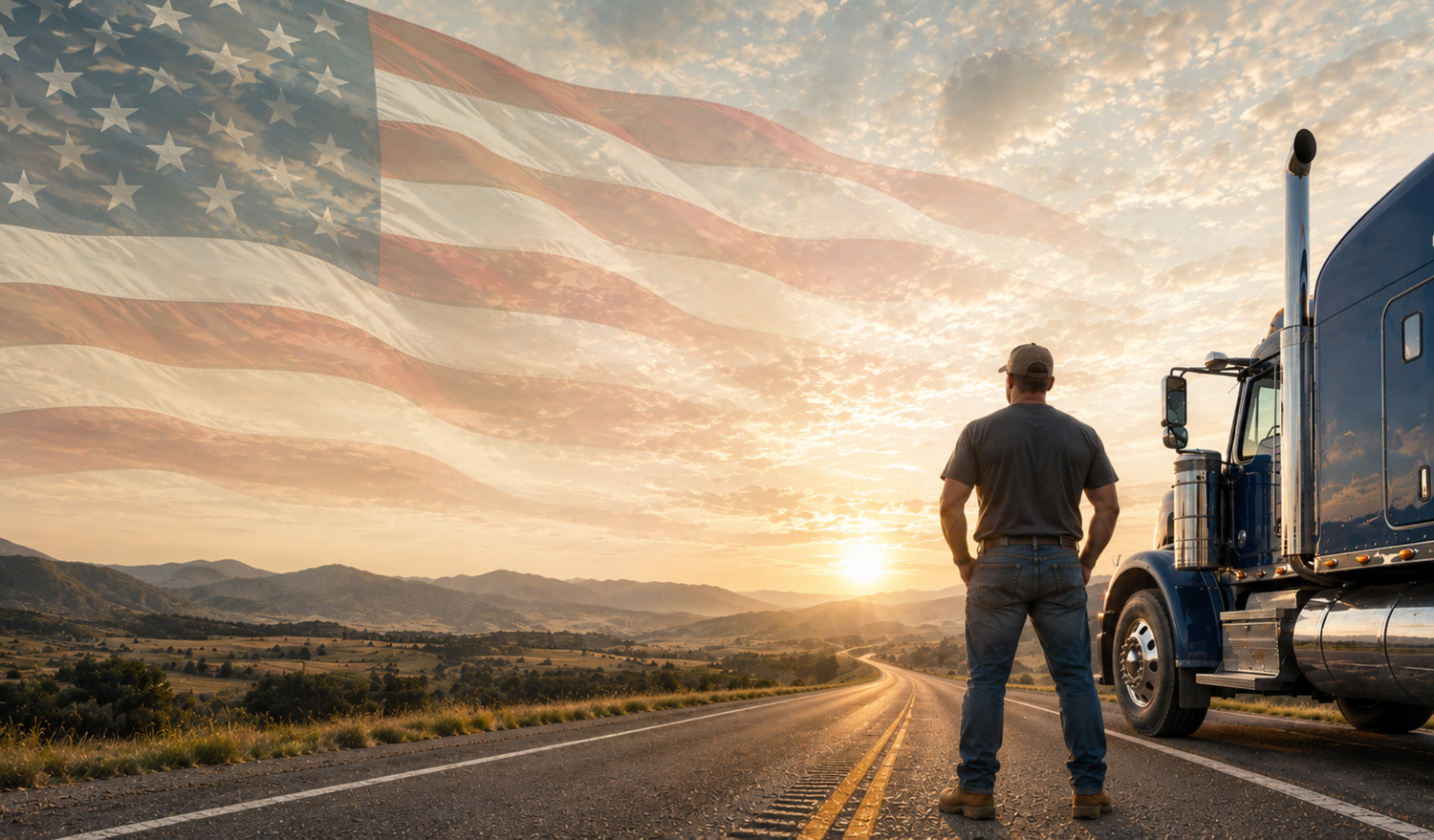
There’s a reason this resonates beyond trucking. The same principles that built this country are the ones that build a successful small business. Self-reliance. Personal responsibility. The understanding that liberty was never meant to be free of cost — that the people who fought for independence knew exactly what it required of them and paid it anyway.
The founders didn’t want freedom from responsibility. They wanted the freedom to take responsibility for themselves. That’s the same thing you signed up for the day you put your name on the title to that truck. The dream and the discipline are inseparable. They always have been.
So Where Does That Leave You
If you’re already an owner-operator, none of this should scare you. It should focus you. The freedom you wanted is real, and it’s yours — but it’s held up by planning, discipline, cash, good decisions, and accountability. Strengthen any one of those and your business gets sturdier.
If you’re still thinking about going independent, go in with your eyes open. Want the freedom, but respect what it costs.
And if you do just one thing after reading this, make it this: start your cash reserve. Not someday — this week. Open the account, name it, and put something into it from your very next settlement, even if it’s small. That single habit has saved more trucking businesses than any load board ever has. It’s the difference between freedom that lasts and freedom that breaks at the first hard hit.
That’s the real cost of independence. It was never free. But for the driver willing to pay it, there’s nothing else like it.
Want to build the business behind the wheel? That’s exactly what we work on every day inside the Let’s Truck Tribe — and on the radio show. Come run with people who are doing it right.